


When I joined a new company as the Plant Manager back in 2019, the General Manager shared his dream with me which started in 2017: “Grow the company 5 times in 5 years.” That vision made me pause and think.
At that moment, I knew that Lean, Six Sigma, and TOC would be essential but not enough on their own. These proven methodologies drive efficiency, quality, and constraint management, but achieving 5 times growth in 5 years demanded something more. It required a Breakthrough approach — not to replace Lean, Six Sigma, or TOC, but to add something beyond their natural limits.
Why Lean, Six Sigma, and TOC Are Not Enough
- Lean focuses on efficiency, eliminating waste, and making processes smoother. But efficiency alone won’t drive 5 times growth — you can only cut so much waste before hitting a ceiling.
- Six Sigma ensures quality and consistency, reducing defects to near perfection. However, it doesn’t create new opportunities — it perfects the existing ones.
- TOC (Theory of Constraints) helps in identifying and managing bottlenecks. But even if we optimize constraints, it still works within existing limitations rather than breaking past them.
If we had relied solely on these methods, growth would have been slow and linear; 5 times in 5 years required a different mindset — a Breakthrough mindset — one that doesn’t just improve what exists, but creates what doesn’t.
The Power of Breakthrough
Breakthrough is not about fixing what exists; it’s about creating what doesn’t. It challenges existing constraints, reinvents processes, and finds new opportunities for scale. Here’s why Breakthrough was essential:
- We needed to redefine our market approach – Instead of just improving operational efficiency, we explored new customer segments, business models, and revenue streams.
- Technology was a game-changer – Leveraging automation and digital transformation, we moved beyond incremental improvements and scaled operations at an unprecedented pace.
- We broke internal silos – Collaboration between departments wasn’t just encouraged — it was restructured for faster decision-making and innovation.
- Risk-taking became a strategy – Instead of avoiding risk, we managed and leveraged it to unlock new capabilities.
Without Breakthrough, the challenge of 5 times in 5 years would have been impossible. But with it, we weren’t just making things better — we were making things different, faster, smarter, and more scalable.
How Does Breakthrough Compare to Lean, Six Sigma, and TOC?
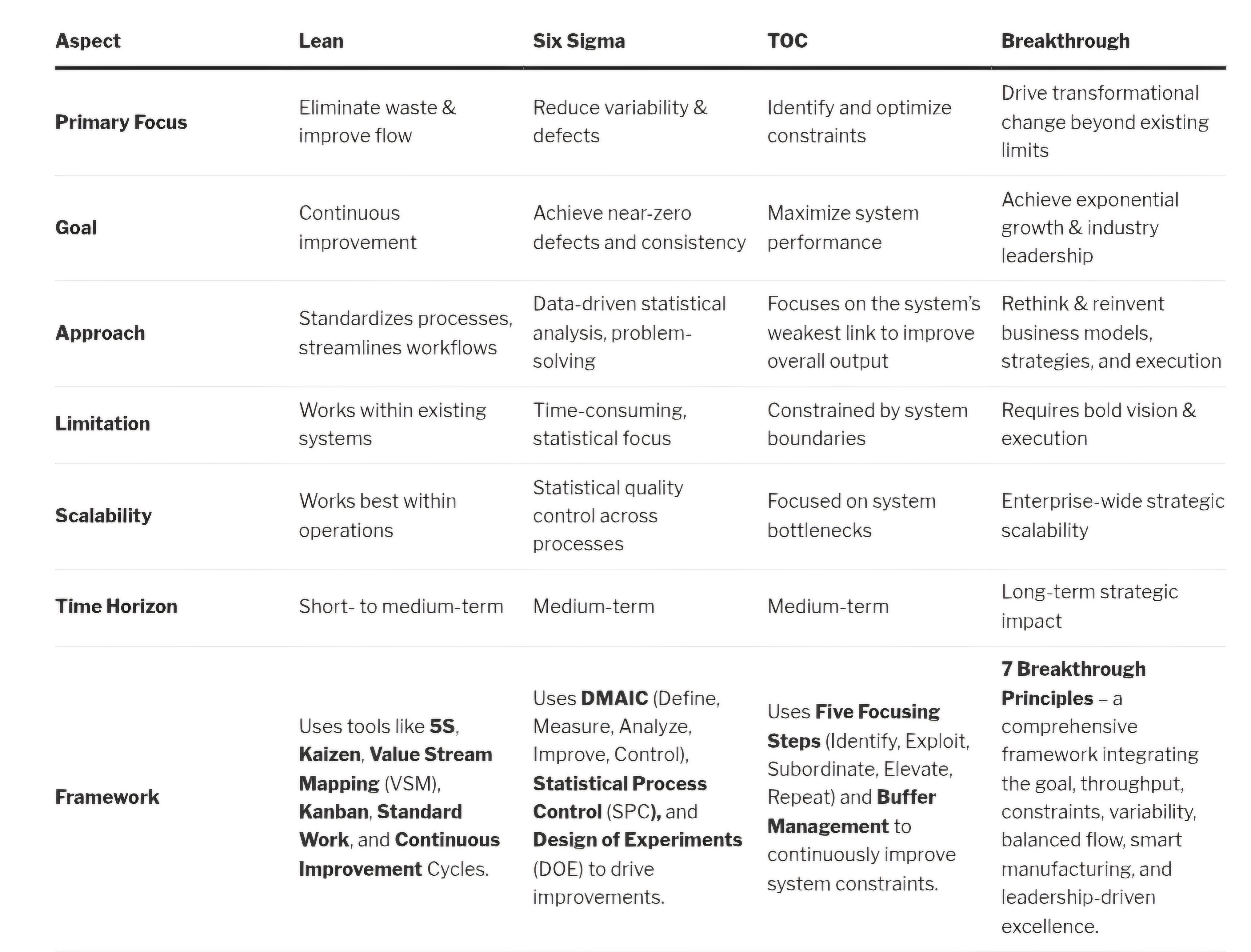
The Bottom Line: Why Breakthrough Matters
Achieving 5 times growth in five years was no accident — it was the result of strategic vision, disciplined execution, and a relentless commitment to excellence. But true success isn’t just about reaching a milestone; it’s about sustaining momentum and driving continuous transformation.
In a rapidly evolving business landscape, where adaptation is key, this company continues to accelerate with confidence, powered by the 7 Breakthrough Principles. These principles are more than just a framework—they are a proven strategy for transformational growth, integrating key aspects of operations, strategy, and leadership to break past traditional limits:
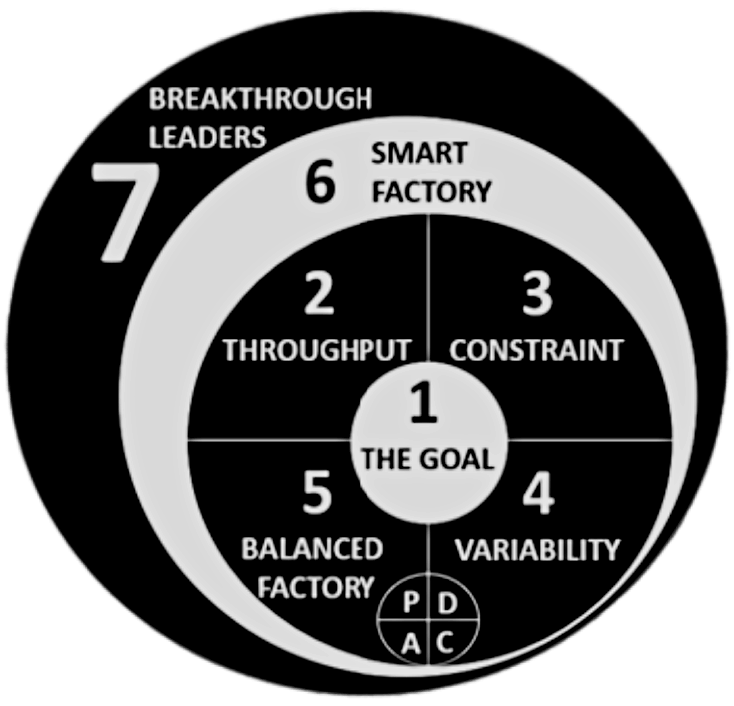
✅The Goal: The goal of the business is to make money and continually grow.
✅Throughput: Throughput is the rate at which the business generates money through sales.
✅Constraints: Constraints dictates the throughput performance.
✅Variability: Variability reduces the predictability of the constraint.
✅Balanced Factory: Balance flow system protects the system from variability
✅Smart Factory: Technology is an enabler towards excellence.
✅Breakthrough Leaders: Leaders make things happen.
These principles do not replace Lean, Six Sigma, and TOC—they enhance and extend their impact, enabling companies to move beyond incremental improvements to achieve breakthrough performance.
The ability to introduce new products, expand market reach, and continuously innovate is not just a reaction to change — it is a deliberate strategy for long-term success. Each milestone is not an endpoint but a stepping stone toward even greater achievements.
🚀 In a world of constant change, success belongs to those who don’t just adapt—they lead.
 Engaged